
Can't Sleep Without Painkillers for Your Back? When Scans Are Clear but the Pain Won't Go


It's become a nightly routine. Before bed, you take your tablets: Myospaz, Zulu MR or another muscle relaxant, maybe pregabalin or another nerve tablet your doctor prescribed. Without them, your back aches and you toss and turn until 3am. You've done the X-ray. You've done the MRI. You may even have tried physiotherapy before. Everyone says, "There's nothing serious." But the pain is real, and the tablets are the only thing that gets you through the night.
If this is you, you're not imagining it, and you're not weak for needing help.
Why clear scans don't mean no pain
X-rays and MRIs show bones and discs. They don't show how your muscles, joints and nerves are working. Many people with long-lasting back pain have:
- Tight, guarding muscles that never fully switch off, even at night
- Stiff joints in the lower back or pelvis that only show up in a hands-on check
- Weak support muscles in the buttocks and tummy that leave the back doing all the work
- A sensitive alarm system. When pain lasts for months, your nerves and brain can become extra-sensitive, like a car alarm that goes off when someone walks past. The danger has gone, but the alarm keeps ringing.
That's why the pain can be strong even when the scan looks normal.
Why tablets alone aren't the answer
Muscle relaxants and nerve medicines can help in the short term, and your doctor may have good reasons for prescribing them. But they mostly turn down the volume of the pain; they don't fix tight muscles, stiff joints or weak support. Over time, many people find they need them every night, feel drowsy or foggy the next day, and worry about what happens if they stop.
Please don't stop or cut down on your own. Some of these medicines, especially nerve tablets like pregabalin, need to be reduced slowly with your doctor's guidance. If you're taking more than prescribed, or feel you can't manage without them, talk to your doctor or pharmacist.
How orthopaedic physiotherapy is different
If physiotherapy didn't help before, it may not have found the real cause. At Katasi Physiotherapy, our orthopaedic physiotherapist does a detailed, hands-on assessment of your back, pelvis and hips to find what the scans missed. Then we:
- Release long-standing muscle tension with hands-on therapy and dry needling
- Free up stiff joints in the back and pelvis
- Calm the alarm system with gentle, step-by-step movement that shows your back it's safe to move
- Rebuild strength so your back is supported day and night
- Improve sleep with positions and simple bedtime routines that ease back pain
As your pain settles and your sleep improves, you and your doctor can plan to reduce the tablets safely.
Read more: Lower Back Pain at Night?, "Lumbar Muscle Spasm" on Your X-ray or MRI? and Lower Back Pain: Why Rest and Scans Aren't the Answer
See a doctor straight away if
You have back pain with fever, unexplained weight loss, loss of bladder or bowel control, numbness around your private parts, weakness in your legs, or night pain that stays the same in every position.
Book in Westlands
You deserve to sleep without reaching for a tablet first. Bring your scans and a list of your medicines to your first visit. Visit Katasi Physiotherapy at Kerai Office, Mogotio Road off Muthithi Road, Westlands, Nairobi. Call or WhatsApp 0705 717 353 to book. Open Monday to Friday 7am–6pm and Saturday 8am–4pm.
Related articles

Lower Back Pain at Night? Why You Can Only Sleep Curled Up on Your Side
By Moses Katasi, Orthopaedic Physiotherapist · 4 November 2026
The woman in the photo has found the only position that works: on her side, knees bent up. If you have this kind of back pain, you know it well. Lying on your back makes your lower back ache. Lying on your stomach is impossible. So you lie on one side with a pillow between your knees. After a while you stretch your legs out, then pull your knees back up towards your chest, then turn to the other side. Night after night.
Read article →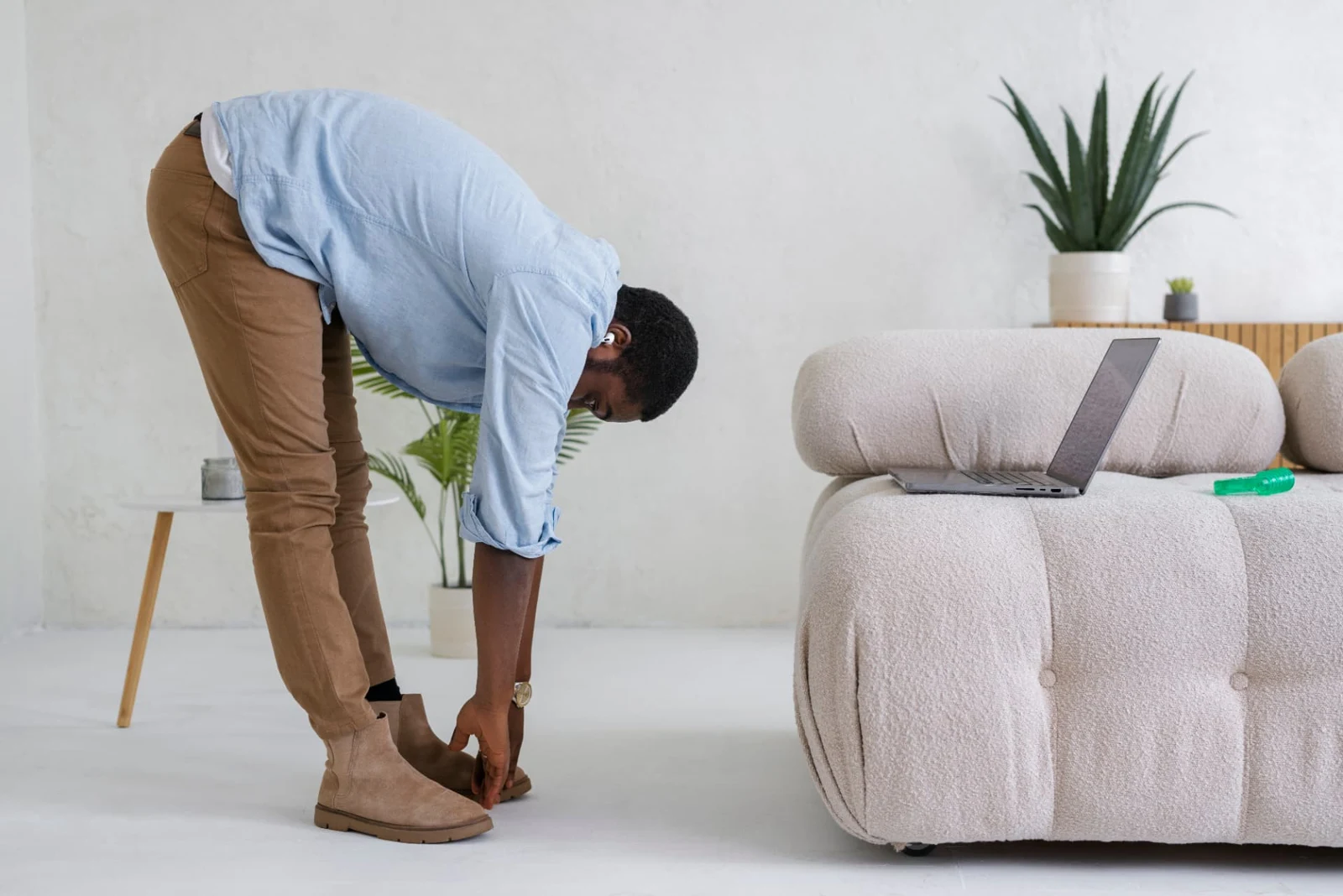
Can't Bend Over Because of Lower Back Pain? Why Your Back Feels Stuck and How to Free It
By Moses Katasi, Orthopaedic Physiotherapist · 2 November 2026
Look at the man in the photo, bending down and touching his toes with ease. A few months ago, that was you. Now you bend forward and your lower back stops you before your hands even reach your knees. Putting on trousers means sitting on the bed and fighting with each leg. Stepping over a trench by the road or up onto a stone while walking makes your back grab. You feel stiff, stuck and much older than you are.
Read article →
Hurt Your Back Lifting the Couch or Cleaning? What to Do About a Pulled Back Muscle
By Moses Katasi, Orthopaedic Physiotherapist · 1 November 2026
The man in the photo knows this feeling. Saturday morning, cleaning day. You bend to shift the couch so you can sweep under it, or lift a heavy bucket of water, or carry the gas cylinder to the kitchen. Then a sharp catch or pulling feeling grips your lower back. You freeze, one hand on your back, and straighten up slowly. You manage the rest of the day, but by evening your back is stiff. Days later, it still nags when you sit at work, roll over in bed or bend to wear your shoes.
Read article →