
Sciatica: why your leg hurts when the problem is in your back

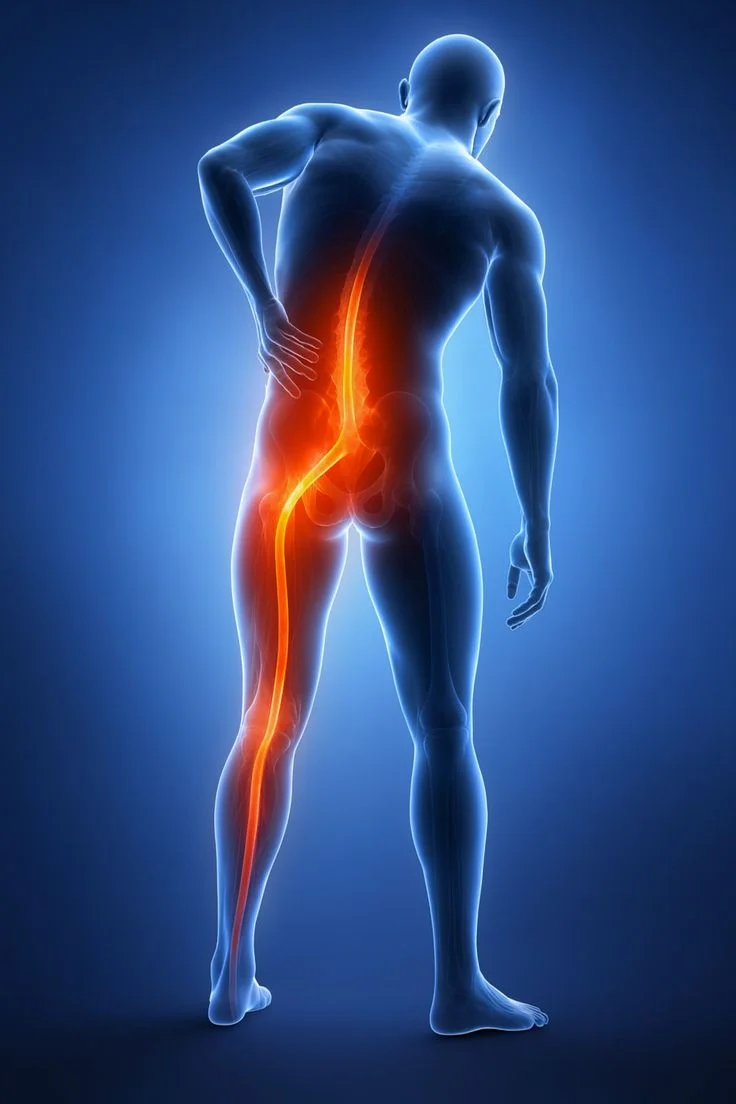
"My leg is killing me, but the doctor says it's my back." We hear this often. Sciatica can be confusing, because the place that hurts is not always where the problem starts.
What is sciatica?
The sciatic nerve is the largest nerve in your body. It starts from several nerve roots in your lower back, runs through your buttock and travels down the back of your leg to your foot.
When one of those nerve roots is irritated or squeezed, often by a bulging disc or by stiffness and swelling around the joints of the spine, the nerve sends pain signals along its whole path. Your brain feels the pain in the leg, even though the irritation is in the back.
What it feels like
- Pain shooting from the buttock down the back of the leg
- Tingling, pins and needles or numbness in the leg or foot
- Pain that is worse when sitting, bending forward, coughing or sneezing
- Sometimes very little back pain at all
Long hours sitting in traffic or at a desk, lifting awkwardly, and weak or stiff hips can all play a part.
The good news
Most sciatica settles with time and the right care. Bed rest is usually not the answer. Gentle movement helps the nerve calm down and stops your back and hips from stiffening up.
Things that often help in the first days:
- Short, gentle walks several times a day
- Changing position often instead of sitting for long periods
- Lying on your back with your knees bent, or on your side with a pillow between your knees
- Avoiding heavy lifting while the pain is strong
How physiotherapy helps
At Katasi Physiotherapy, we start by checking your back, hips and the nerve itself: how far you can bend, how your leg strength and reflexes are, and which movements ease or worsen the pain. This tells us what is likely irritating the nerve.
Treatment usually combines nerve mobility exercises to help the nerve glide more freely, manual therapy to ease stiff joints, and exercise therapy to build strength in your back, hips and core. You leave with a short plan to follow at home, and we adjust it at each visit as things improve.
Recovery time varies from person to person. Some people feel better within a few weeks; others need longer. We will be honest with you about what to expect.
When to see a doctor urgently
Sciatica is rarely an emergency, but some signs need a doctor straight away. Go to hospital if you have:
- Numbness around the groin or between the legs
- Trouble controlling your bladder or bowels
- Weakness in both legs, or a foot that suddenly drops or drags
When to see a physiotherapist
Book an assessment if leg pain, tingling or numbness lasts more than a few days, keeps coming back, or stops you sleeping, working or walking comfortably.
If this sounds like you, send us a WhatsApp message and we will help you get moving again.