
Why Is My Neck Always Stiff? How Tight Neck Muscles Cause Pain


Your neck never feels truly relaxed. You roll it, squeeze it, and crack it a few times a day for a moment of relief. By evening, it's tight and sore again, sometimes with a dull headache. You can't remember when it started, and it never quite goes away.
Why neck muscles stay stiff
Your neck muscles hold up your head all day. When they're asked to work hard for hours, with no break, they slowly tighten up and don't fully let go. Over weeks and months, the tension builds, like a rubber band that's been stretched too long. Stiff muscles have less blood flow, get tired faster, and start to hurt.
What keeps them tight
- Stress and worry: your shoulders creep up and your neck tenses without you noticing
- Long hours at a desk or laptop, with your head pushed forward
- Phone use with your head bent down
- Poor sleep or an unsupportive pillow
- Little movement or exercise during the week
- Cold mornings, when muscles feel stiffer
Signs it's muscle stiffness
- A constant tight or heavy feeling in your neck and shoulders
- Tender knots you can feel when you press
- An urge to crack, roll or stretch your neck often
- Stiffness in the morning or after sitting, easing with heat or a massage
- Headaches at the back of the head or across the forehead
Is cracking my neck bad?
An occasional gentle crack isn't dangerous, but it only gives short relief because it doesn't release the tight muscles. If you feel you have to crack your neck many times a day, that's a sign the muscles need proper treatment.
What helps today
- Heat on your neck and shoulders for 15 to 20 minutes
- Gentle neck turns and shoulder rolls every hour
- Raise your screen to eye level
- Take a few slow, deep breaths when you notice your shoulders lifting
How Katasi Physiotherapy releases stiff necks
We find exactly which neck and shoulder muscles are tight and why. Then we release them with hands-on therapy, massage and dry needling, loosen stiff neck joints, and give you simple exercises to strengthen your neck and upper back. You'll also get practical tips for work, sleep and stress. Many people say their neck feels "light" again after the first session.
Read more: Is Your Neck Pain From a Tight Muscle? A 2-Minute Self-Check, "Text Neck" and Headaches That Start in Your Neck
See a doctor straight away if
Your neck stiffness comes with fever, a severe headache, sensitivity to light, numbness or weakness in your arms, or started after an accident or fall.
Book in Westlands
Your neck shouldn't feel tight every day. Visit Katasi Physiotherapy at Kerai Office, Mogotio Road off Muthithi Road, Westlands, Nairobi. Call or WhatsApp 0705 717 353 to book. Open Monday to Friday 7am–6pm and Saturday 8am–4pm.
Related articles

Neck and Shoulder Pain Together? How to Tell Where It's Really Coming From
By Moses Katasi, Orthopaedic Physiotherapist · 9 November 2026
It starts at the side of your neck and spreads across the top of your shoulder. Some days it's your neck that aches, other days it's your shoulder. Turning your head hurts, and so does lifting your arm to hang clothes or reach the top shelf. So which one is the real problem?
Read article →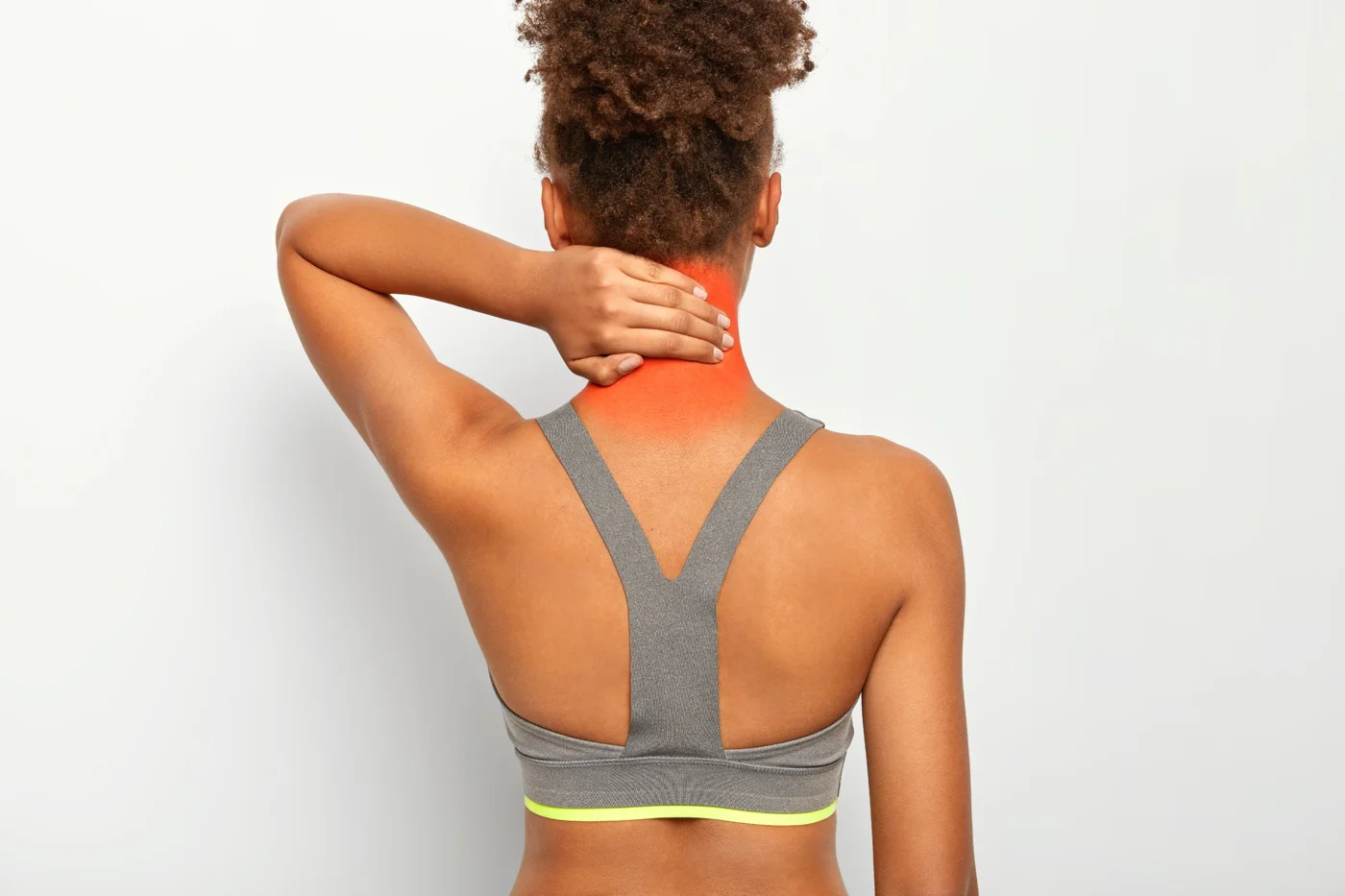
Neck Pain After a Car or Matatu Accident: Is It Whiplash?
By Moses Katasi, Orthopaedic Physiotherapist · 19 October 2026
You were waiting at the lights on Waiyaki Way when a car hit you from behind. It didn't feel serious. You exchanged numbers and drove home. The next morning, your neck is stiff, turning your head hurts, and a headache sits at the back of your skull. This is a classic story of whiplash.
Read article →
Neck Pain When You Turn Your Head? Why You Can't Look Over One Shoulder
By Moses Katasi, Orthopaedic Physiotherapist · 16 October 2026
Look at the red line in the photo, running from just behind the ear down to the top of the shoulder. If that's where it hurts when you turn your head, you know how annoying it is. You try to check your blind spot while changing lanes on Waiyaki Way, and your neck stops halfway with a sharp pull. You can't see your right shoulder, so you end up turning your whole body instead. Even turning to answer a colleague hurts.
Read article →